

Pregnancy changes almost everything about a woman’s body, and that includes her mouth. Shifting hormone levels can make gums more sensitive, raise the risk of cavities, and bring on conditions many women have never dealt with before. The reassuring part is that oral health during pregnancy can be managed safely and comfortably, trimester by trimester. This guide walks you through exactly what to expect and how to protect both your smile and your baby’s health along the way.
Why Oral Health Matters More During Pregnancy
Rising levels of estrogen and progesterone change the way your body responds to plaque and bacteria, which makes gums more prone to inflammation and bleeding. Research has also linked untreated gum disease to complications such as preterm birth and low birth weight, which is why dental care during pregnancy is now viewed as an essential part of prenatal wellness, not an optional extra. Keeping your teeth and gums healthy supports your own comfort and gives your baby a healthier start.
Common Dental Problems During Pregnancy
-
• Pregnancy Gingivitis
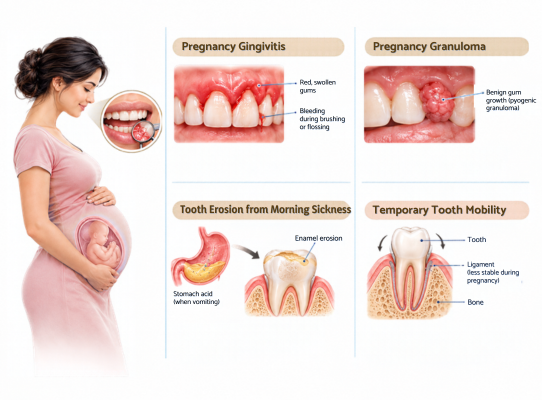
Pregnancy gingivitis is one of the most common complaints, affecting a large share of expecting mothers, especially between the second and eighth month. Increased blood flow to gum tissue makes it more reactive to plaque, leading to redness, swelling, and bleeding during brushing or flossing. It usually improves with consistent oral hygiene and professional cleaning.
-
• Pregnancy Tumors (Pyogenic Granulomas)
Despite the alarming name, a pregnancy tumor is a benign, non-cancerous overgrowth of gum tissue that can appear in the second trimester, often between the teeth. It is usually painless, tends to bleed easily, and typically shrinks or disappears on its own after delivery. If it causes discomfort or keeps growing, your dentist can remove it safely.
-
• Tooth Erosion From Morning Sickness
Frequent vomiting exposes teeth to stomach acid, which can gradually wear down enamel and increase sensitivity. Rinsing with plain water or a pinch of baking soda in water right after vomiting, rather than brushing immediately, helps protect the enamel while it is temporarily softened.
-
• Loose Teeth
Hormonal shifts can temporarily loosen the ligaments and bone that support your teeth. This is usually mild and resolves after pregnancy, but any noticeable or worsening looseness should be checked by a dentist to rule out underlying gum disease.
Is It Safe to Visit the Dentist During Pregnancy?
Yes. One of the most common questions expecting mothers ask is whether it’s safe to visit the dentist while pregnant, and the answer is a clear yes. Routine checkups, cleanings, and most necessary treatments can continue throughout pregnancy. Always let your dentist know you’re pregnant and how far along you are, so appointments and any required precautions can be planned accordingly.
| Good to know:
The second trimester (weeks 13 to 27) is generally considered the safest and most comfortable window for non-emergency dental treatment, since morning sickness has usually eased and sitting for longer periods is less uncomfortable than in the third trimester. |
Trimester-by-Trimester Oral Care Guide
Here is a quick reference for what to expect and how to care for your teeth and gums at each stage of pregnancy.
| Trimester | What You Might Notice | Dental Care Tips |
|---|---|---|
| First Trimester (Weeks 1–12) |
Morning sickness, a heightened gag reflex, fatigue | Keep brushing with a soft-bristled brush, rinse with water after vomiting, inform your dentist you’re pregnant, and avoid elective X-rays unless it’s an emergency |
| Second Trimester (Weeks 13–27) |
Gums may start bleeding more, pregnancy gingivitis often peaks | The safest time for routine cleanings, fillings, or root canal treatment if needed, along with gentle daily flossing |
| Third Trimester (Weeks 28–40) |
Discomfort sitting for long periods, pregnancy tumors may appear | Stick to urgent or essential treatment, ask for shorter appointments, and continue your home care routine until delivery |
Daily Oral Care Tips for Expecting Mothers
-
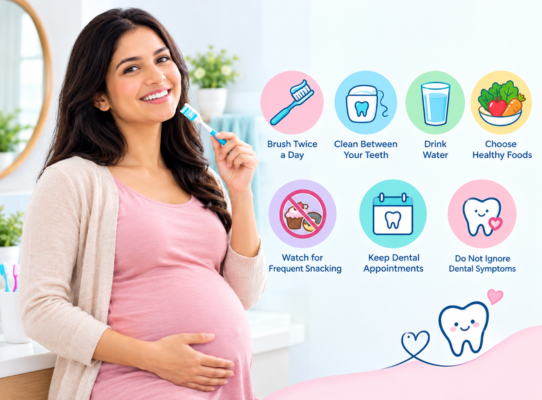
• Brush twice a day
Use a soft-bristled toothbrush and fluoride toothpaste for two minutes, unless your dentist has advised otherwise. If nausea makes morning brushing hard, try another time of day when you feel better.
-
• Clean between your teeth
Floss or interdental brushes remove plaque that a toothbrush cannot reach. Be gentle. Bleeding often eases as gums become healthier, but if it continues, see your dentist.
-
• Manage morning sickness
Rinse with water after vomiting and wait before brushing, as described above.
-
• Watch frequent snacking
Small meals can ease nausea, but constant sweet snacks or sugary drinks keep teeth under repeated acid attack. Pair snacks with water where you can.
-
• Drink water
Regular sips support hydration, wash away food particles and help with dry mouth.
-
• Keep dental appointments
Preventive visits catch gum changes and early cavities before they hurt. During pregnancy, I encourage patients to treat a dental check-up like any other prenatal appointment.
-
• Do not ignore dental symptoms
Pain, swelling and persistent bleeding deserve a proper evaluation, not waiting.
Foods That Support Healthy Teeth and Gums During Pregnancy
A balanced, tooth-friendly diet benefits both you and your baby’s developing teeth and bones:
- • Dairy products such as milk, yogurt, and cheese for calcium
- • Leafy greens and nuts for additional minerals that support bone and enamel strength
- • Citrus fruits in moderation for vitamin C, rinsing afterward to protect enamel from acidity
- • Plenty of water throughout the day to rinse away food particles and bacteria
Oral Health During Pregnancy: What Should You Remember?
Key points
- • Pregnancy can affect your gums and your oral hygiene routine.
- • Bleeding gums should not automatically be ignored.
- • Good daily oral hygiene remains important.
- • Regular dental care can continue during pregnancy.
- • Necessary treatment should not be delayed simply because you are pregnant.
- • Always tell your dentist that you are pregnant.
- • Seek advice for pain, swelling, infection or persistent symptoms.
Looking after your own mouth also supports your baby. Our guide to caring for your baby’s first teeth is a good next read.
Warning Signs You Shouldn’t Ignore
While mild gum sensitivity is common in pregnancy, certain symptoms call for prompt attention:
- • Gum bleeding that is heavy, persistent, or getting worse
- • Swelling, pus, or a bad taste that doesn’t go away
- • Severe or throbbing tooth pain
- • Teeth that feel increasingly loose
- • A lump or growth on the gums that is painful or rapidly enlarging
If you notice any of these, don’t wait for your next scheduled visit. Early evaluation prevents small issues from becoming bigger ones, for both you and your baby.
Dental Care During Pregnancy at Elite Dental Clinic, Bhubaneswar
If you are pregnant and experiencing tooth pain, gum bleeding, sensitivity, swelling, or any other dental concern, you do not need to wait until after delivery to seek dental care. At Elite Dental Clinic, Bhubaneswar, we can assess your oral health and plan appropriate dental care based on your pregnancy and individual needs.
I am Dr. Smruti Nanda Mahapatra, BDS, MDS (Prosthodontist and Implantologist), and patient safety and comfort are important when providing dental care during pregnancy. If you are scheduling an appointment, let us know that you are pregnant and how far along you are so that your visit can be planned accordingly.
Elite Dental Clinic is located on the third floor of Royal Arcade Complex, Nandankanan Road, Patia, Bhubaneswar. The clinic is open Monday to Saturday, 10 am to 7 pm. For an appointment or to discuss a dental concern during pregnancy, call +91 93379 33405.
Frequently Asked Questions
Is it safe to get dental treatment during pregnancy?
Yes. Routine cleanings, fillings, and necessary root canal treatments are safe throughout pregnancy, with the second trimester generally being the most comfortable time for non-emergency work.
Why do my gums bleed more during pregnancy?
Rising hormone levels increase blood flow and sensitivity in gum tissue, a condition known as pregnancy gingivitis, which makes gums more likely to bleed when you brush or floss.
Can I get a dental X-ray while pregnant?
Dental X-rays are generally avoided unless there’s a dental emergency. When one is necessary, a lead apron and thyroid collar are used to shield you and your baby.
Is teeth whitening safe during pregnancy?
Teeth whitening is usually postponed until after delivery as a precaution, since the effects of whitening chemicals during pregnancy haven’t been thoroughly studied.
Can poor oral health affect my baby?
Untreated gum disease has been linked to complications such as preterm birth and low birth weight, so maintaining good oral health during pregnancy benefits both mother and baby.
When is the best time to visit the dentist during pregnancy?
The second trimester is considered the safest and most comfortable window for planned dental treatment, though routine checkups and emergencies can be handled safely at any stage.
Can pregnancy cause loose teeth?
Yes. Hormonal changes can temporarily loosen the ligaments and bone supporting your teeth, and this typically improves on its own after delivery.
Dental Insights You Shouldn’t Miss :-
👉 Bleeding Gums While Brushing? Causes, Treatment & Prevention
👉 Oral Care Tips for Seniors: Keeping Your Smile Healthy at Any Age
👉 Preventative Dental Care for All Ages at Elite Dental Clinic, Patia, Bhubaneswar
Our Clinic Information
3rd floor, 303, Royal Arcade Complex, Nandankanan Rd, Patia, Bhubaneswar, Odisha 751024
Have any question?
+91 93379 33405
Send email
elitehealthcompany@gmail.com