
Want whiter teeth but not sure whether to choose professional teeth whitening or try a home remedy?
Baking soda, lemon, charcoal, oil pulling, and hydrogen peroxide are often promoted online as easy ways to whiten teeth. But not every home remedy can actually whiten teeth, and some may harm the enamel or irritate the gums when used incorrectly.
Professional teeth whitening, on the other hand, is planned around the condition of your teeth and the type of discolouration you have.
So, which option is right for you? The answer depends on what is causing your teeth to look discoloured, your oral health, and the type of whitening results you want.
Why Do Teeth Become Yellow or Discoloured?
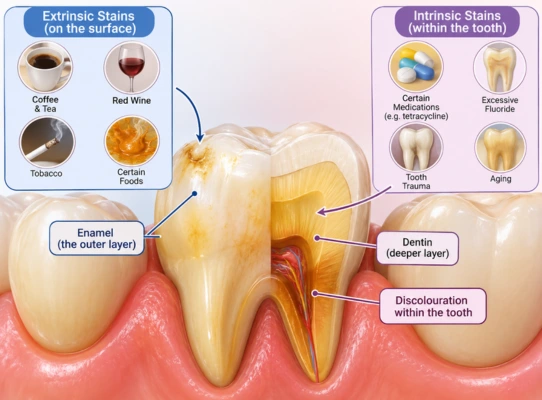
Teeth can become darker or more yellow for several reasons. Some stains develop on the outer surface of the teeth, while others are related to changes within the tooth itself.
1. Extrinsic stains
Extrinsic stains develop on the outside of the teeth. Common causes include:
- • Tea and coffee
- • Red wine, tobacco, and smoking
- • Pigmented foods
- • Poor oral hygiene
- • Plaque buildup
- • Some mouthwashes
These sit on the outer enamel layer and usually respond well to whitening.
2. Intrinsic discolouration
Discoloration that develops inside the tooth from aging, certain medications, excess fluoride exposure in childhood, or trauma to a tooth. These stains sit deeper and often need a dentist’s assessment to treat effectively.
Identifying which type of staining you have is the first step, and it is something a home remedy simply cannot diagnose.
Popular Home Remedies for Teeth Whitening: Do They Really Work?
Search “teeth whitening at home” and you will find no shortage of remedies. Here is what the evidence and my clinical experience say about the most common ones:
1. Baking soda
Baking soda is commonly used in DIY teeth-whitening routines.
It has mild abrasive properties, so it may help remove some surface stains. However, removing surface stains is not the same as changing the natural colour of the tooth.
Using abrasive materials too aggressively or too often is not a good substitute for professional whitening.
2. Activated charcoal
Popular on social media, but dental research has not confirmed it whitens teeth safely, and its abrasiveness can damage enamel with regular use.
The ADA has cautioned against charcoal-based whitening trends because of their abrasive nature.
3. Oil pulling
Oil pulling involves swishing oil around the mouth for a period of time.
It has become popular on social media as a supposed natural whitening method. However, there is not good evidence that oil pulling meaningfully whitens teeth.
It should not replace brushing, flossing, professional cleaning, or other evidence-based dental care.
4. Hydrogen peroxide rinses
Hydrogen peroxide is used in many legitimate teeth-whitening products, but that does not mean household hydrogen peroxide should be used as a DIY whitening treatment.
The concentration, formulation, application method, and exposure time all matter.
Incorrect use can irritate the gums and increase tooth sensitivity. Hydrogen peroxide-based whitening should therefore be approached carefully rather than treated as a simple home remedy.
5. Lemon and Other Acidic Remedies
Lemon juice is sometimes suggested as a natural teeth-whitening solution.
This is not a good whitening method.
Lemon is acidic, and repeated exposure to acids can contribute to enamel erosion. Using an acidic substance to try to whiten teeth can therefore create more problems than benefits.
| A Dentist’s Note
Most home remedies work on the surface, at best, and several can quietly damage your enamel before you notice any whitening effect. Enamel does not regenerate, so this damage is permanent. |
How Professional Teeth Whitening Works
Professional teeth whitening is performed under clinical supervision, using whitening agents at controlled concentrations that are far more effective, and safer, than anything available over the counter.
1. In-Office Whitening
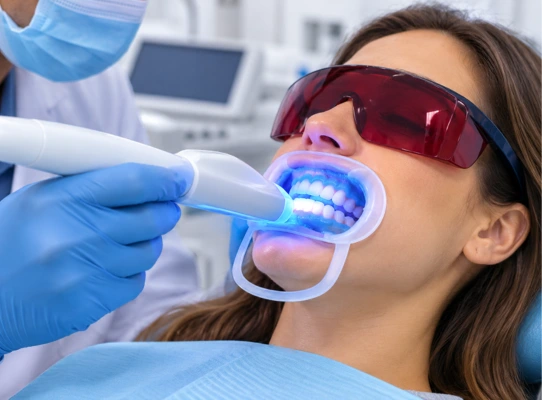
A dentist-administered, in-office whitening session uses a higher-strength whitening gel, often activated with a special light, to lift stains in a single visit. Your gums and soft tissue are protected throughout, and results are visible immediately.
2. Take-Home Custom Trays
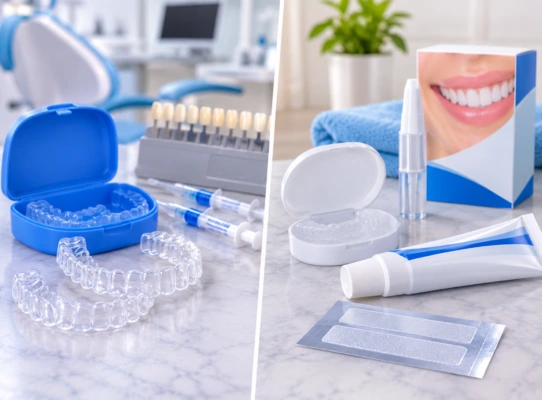
For patients who prefer a gradual approach, I provide custom-fitted trays with a prescription-strength gel for supervised use at home. Because the trays are molded to your teeth, the gel is distributed evenly and kept away from your gums, unlike generic whitening strips.
3. Addressing the Root Cause First
Before any whitening treatment, I examine your teeth and gums to rule out cavities, gum disease, or worn enamel. Whitening over untreated dental problems can worsen sensitivity, so this evaluation step is non-negotiable in a responsible treatment plan.
Why choose professional whitening?
Professional treatment offers several advantages:
- • Your teeth and gums can be assessed before whitening.
- • The whitening method can be selected according to your needs.
- • The amount and application of whitening material can be controlled.
- • The treatment can be adjusted if you have sensitivity.
- • You can have more realistic expectations about the result.
- • Existing fillings, crowns, veneers, or other restorations can be considered before treatment.
Professional whitening can also provide results more quickly than some over-the-counter options, although the exact result and treatment time vary from person to person.
Professional Treatment vs Home Remedies: A Side-by-Side Comparison
Here is a simple comparison:
| Factor | Professional Teeth Whitening | Home Remedies |
|---|---|---|
| Effectiveness | Can provide more controlled and predictable whitening | Often limited, especially for deeper discolouration |
| Speed | Results may be visible more quickly depending on the treatment | Usually requires repeated or longer-term use |
| Safety | Treatment can be planned around your dental health | Risks increase when DIY methods are used incorrectly |
| Treatment control | Concentration and application can be professionally controlled | Difficult to control with homemade methods |
| Different types of stains | Dentist can assess whether whitening is appropriate | May have limited effect on intrinsic discolouration |
| Sensitivity | Can be monitored and managed | Incorrect use may increase sensitivity |
| Gum protection | Professional treatment includes measures to reduce unwanted contact | DIY application may be difficult to control |
| Existing restorations | Crowns, veneers and fillings can be considered | May result in uneven colour if natural teeth whiten but restorations do not |
| Long-term results | Depends on habits, stain exposure and individual factors | Results vary and may be limited |
Is Professional Teeth Whitening Safe?
When properly planned and performed, teeth whitening is generally considered a safe cosmetic dental procedure. However, it is not completely free from possible side effects.
The most common ones include:
-
• Temporary tooth sensitivity
Some people experience sensitivity during or after whitening. It is generally temporary, but the level can vary between individuals.
Higher concentrations and other treatment factors can affect the likelihood and intensity of sensitivity.
-
• Gum irritation
Whitening gel can irritate the gums if it comes into contact with them.
Proper application and protection of the soft tissues can help reduce this risk.
-
• Existing dental problems
you have cavities, gum disease, damaged teeth, or significant sensitivity, whitening may not be appropriate until these issues are evaluated. Common dental problems can affect oral health and may need to be addressed before considering cosmetic treatment. You can learn more about common dental problems in older adults.
This is one reason a dental examination before whitening can be useful.
Who May Need a Dental Check-Up Before Whitening?
Whitening may not be the first step for everyone.
A dentist may recommend an examination before treatment if you have:
- • Tooth decay
- • Gum disease
- • Significant tooth sensitivity
- • Cracked or damaged teeth
- • Gum recession
- • Unusual or sudden tooth discolouration
- • Deep or intrinsic stains
- • Existing crowns, veneers, fillings, or other restorations
The goal is not simply to determine whether your teeth can become whiter. It is also to identify why they are discoloured and whether whitening is suitable for you.
Risks of DIY Teeth Whitening You Should Know
- • Enamel erosion from abrasive or acidic ingredients, which is irreversible
- • Gum irritation or chemical burns from unsupervised use of peroxide-based products
- • Increased tooth sensitivity, especially with repeated or prolonged use
- • Uneven whitening, particularly around existing crowns, veneers, or fillings, which do not respond to whitening agents
- • Masking a deeper problem, such as early decay or enamel wear, that needs professional attention
Who Should Be Cautious with Teeth Whitening?
Teeth whitening is not the right starting point for everyone. I generally recommend a dental check-up first, and sometimes a different treatment altogether, if you:
- • Have untreated cavities, gum disease, or exposed tooth roots
- • Are pregnant or breastfeeding
- • Have crowns, veneers, or bonding on your front teeth, since these will not change color
- • Experience significant tooth sensitivity
- • Are under 16 years of age, as tooth development may still be ongoing
If stains are caused by issues like chipped enamel or damaged teeth, treatments such as dental veneers orcrowns may give you a more lasting, natural-looking result than whitening alone.
How to Maintain Whiter Teeth After Whitening
Teeth whitening is not a permanent change. Everyday habits can affect how long your teeth continue to look bright.
To help maintain your results:
- • Brush your teeth regularly with a suitable toothpaste.
- • Floss or clean between your teeth every day.
- • Limit frequent exposure to staining drinks such as tea and coffee.
- • Avoid tobacco and smoking.
- • Maintain regular dental check-ups.
- • Follow any aftercare instructions provided by your dentist.
- • Do not repeatedly use strong whitening products simply because you want a faster result.
Good oral hygiene is important not only for maintaining the appearance of your smile but also for your overall oral health.
If you are considering teeth whitening in Bhubaneswar, connecting with a qualified dental professional can help you understand which option is appropriate for your smile. Elite Dental Clinic in Patia, Bhubaneswar, led by Dr. Smruti Nanda, provides teeth whitening and cosmetic dental care with treatment planned according to individual dental needs.
Why Patients Choose Elite Dental Clinic for Teeth Whitening in Bhubaneswar
With over 12 years of clinical experience in cosmetic and restorative dentistry, I take a conservative, evidence-based approach to every smile makeover. At Elite Dental Clinic, every whitening plan begins with a thorough oral examination, hospital-grade sterilization protocols, and a transparent discussion of what result you can realistically expect, so you never pay for a treatment that is not right for you.
If you are ready to explore safe, lasting teeth whitening, you can book an appointment at our Patia clinic, or reach us directly on WhatsApp or by calling +91 93379 33405.
Frequently Asked Questions
Is professional teeth whitening better than home remedies?
Yes. Professional whitening uses controlled, clinically approved concentrations under supervision, giving faster, safer, and longer-lasting results than home remedies.
Can I whiten my teeth naturally at home?
Natural remedies like baking soda or oil pulling may offer very mild surface improvement, but they are not a reliable or proven way to whiten teeth, and some can damage enamel.
Does teeth whitening damage enamel?
Professional whitening performed by a dentist does not damage enamel. Unsupervised DIY methods, especially abrasive or acidic ones, can erode enamel over time.
How long does professional teeth whitening last?
Results typically last from several months to a few years, depending on your diet, oral hygiene, and lifestyle habits like smoking or coffee consumption.
Is teeth whitening safe for sensitive teeth?
It can be, if your dentist adjusts the treatment and concentration after evaluating your teeth. This is why a professional assessment matters before starting.
Why do home remedies not whiten teeth as well as professional treatment?
Home remedies work only on surface stains, if at all, and lack the active whitening concentration and clinical control needed to lighten teeth significantly or safely.
How often can I get my teeth professionally whitened?
Most patients benefit from touch-up treatments every six to twelve months, though this varies based on your stain levels and lifestyle.
Dental Insights You Shouldn’t Miss :-
🦷 Dental Crowns vs Dental Veneers: Understanding the Difference
🦷 Dental Veneers in Bhubaneswar A Complete Guide
🦷 Best Dental Clinic for Smile Makeover in Bhubaneswar
🦷 Dentures vs Dental Implants: Which Is Better for Seniors
Our Clinic Information
3rd floor, 303, Royal Arcade Complex, Nandankanan Rd, Patia, Bhubaneswar, Odisha 751024
Have any question?
+91 93379 33405
Send email
elitehealthcompany@gmail.com